IMPORTANT NOTICE from the WORLD FEDERATION AGAINST DRUGS

Please click on the “Statement from the Congress” below to get the full text of a declaration made in Stockholm, Sweden on May 23d by the WORLD FEDERATION AGAINST DRUGS.

It is a clear and courageous call for renewed efforts to further the goals of Prevention and Treatment world wide.

Statement from the Congress

Posted in Uncategorized | Comments Off on IMPORTANT NOTICE from the WORLD FEDERATION AGAINST DRUGS

LEGALIZATION ON ANOTHER FRONT

Al Arsenault has sent us this piece in the Vancouver Courier by columnist Mark Hasiuk.

It shows clearly how the legalization mentality is not limited to drugs. We have been paying tax dollars in the DTES for social service agencies to run brothels.

These folks believe they are being compassionate and sensible.

They are neither.

I work with prostitutes every week. I don’t know one – I have never met one – who wants to be safe and secure in her or his renting out of body parts by the half hour.

Every prostitute I have ever met is sick and consumed with shame and wants to leave “the life.”

Posted in Uncategorized | Comments Off on LEGALIZATION ON ANOTHER FRONT

NEW SURVEY INDICATES MASSIVE SUPPORT FOR TREATMENT

The following is the summary of an Angus Reid poll done for he Salvation Army and forwarded to us by Mario Conseco of Angus Reid.

The key indicators are these:

– 82% believe we need more services to help people with addictions.

– 73% think we’d have far fewer homeless people if we had better care for people with addictions.

– 77% say treating addictions to drugs and alcohol should be a higher priority for our government.

The complete 12 page report is available here.

Canada Speaks 2012: New Report Reveals Canadians Empathetic Towards Those Suffering From Mental Illness & Addiction

Results from national opinion poll indicate public wants to see more done for those affected

TORONTO, May 1, 2012 /CNW/ – For the second consecutive year, The Salvation Army is announcing May as Dignity Month, and is releasing a report, “Canada Speaks 2012: Mental Health, Addictions and the Roots of Poverty.” The report reveals perceptions and attitudes among the Canadian public about individuals dealing with addiction or suffering from mental illness.

The survey of more than 1,000 Canadians, conducted in February by Angus Reid Public Opinion, revealed that many Canadians have been personally touched by the issue, with 80 percent reporting that they have either a friend or family member who has experienced mental illness and/or addiction. Due to this surprising number, many Canadians empathize with those that suffer from either mental illness and/or addiction and are looking to the government and social service programs to provide additional assistance to these individuals and their families.

Key findings from our report include:

Most Canadians recognize the linkage between mental health and addiction with 71 percent agreeing that “a lot of people with addictions have mental health problems.”
80 percent of survey respondents reported their belief that mental illness causes many Canadians to experience poverty.
87 percent of respondents believe that mental illness should be a higher priority for the government.
84 percent of those surveyed think that there should be more services to help people with addictions.

“In previous reports that we have released, we have seen a Canadian public that hasn’t always been sensitive to, or didn’t understand the needs of vulnerable people in our society,” said Commissioner Brian Peddle, Territorial Commander for The Salvation Army in Canada and Bermuda. “Our latest report revealed an entirely different population, one that is extremely empathetic to those struggling with mental illness and addiction and hope for a better and brighter future for them.”

The Salvation Army is highlighting the issue of mental illness and addiction this month as part of its annual May Campaign and the ongoing Dignity Project. Funds raised during the campaign will directly support those living in poverty today through social services like emergency shelter care, substance abuse counselling and employment training.

The Dignity Project is designed to inspire and educate the public about what it means to live in poverty – and what they can do to help. Through social networking and other communications outreach, The Salvation Army will engage Canadians about the reality of poverty in the 21st century.

“The findings from this year’s report are promising and reveal a population that recognizes the barriers and obstacles facing Canadians that suffer from either mental illness or addiction and how it can lead to a life of poverty,” said Commissioner Peddle. “Many people who seek the assistance of The Salvation Army are affected by one of these issues, so we are pleased that the public is eager to do more to help. The Salvation Army is working today and everyday to restore hope and dignity to all who need our help, regardless of their circumstance.”

The Salvation Army provides direct, compassionate, hands-on service to more than 1.7 million people in Canada each year, restoring hope and dignity to the most vulnerable in society. As an international Christian organization that welcomes everyone, The Salvation Army’s faith motivates its mission to serve and to treat everyone with dignity and respect.

Posted in Uncategorized | Comments Off on NEW SURVEY INDICATES MASSIVE SUPPORT FOR TREATMENT

George Will on Legalization

The following article from the National Post was sent to us by Darcy Ulmer of our member organization Baldy Hughes Therapeutic Community.

George F. Will: Legalized drugs would solve one problem, create many more

George F. Will Apr 5, 2012 – 8:59 AM ET | Last Updated: Apr 5, 2012 8:55 AM ET

WASHINGTON — The human nervous system interacts in pleasing and addictive ways with certain molecules derived from some plants, which is why humans may have developed beer before they developed bread. Psychoactive — consciousness-altering — and addictive drugs are natural, a fact that should immunize policymakers against extravagant hopes as they cope with America’s drug problem, which is convulsing some nations to our south.

The costs — human, financial and social — of combating (most) drugs are prompting calls for decriminalization or legalization. America should, however, learn from the psychoactive drug used by a majority of American adults — alcohol.

Mark Kleiman of UCLA, a policy analyst, was recently discussing drug policy with someone who said he had no experience with illegal drugs, not even marijuana, because he is of “the gin generation.” Ah, said Kleiman, gin: “A much more dangerous drug.” Twenty percent of all American prisoners — 500,000 people — are incarcerated for dealing illegal drugs, but alcohol causes as much as half of America’s criminal violence and vehicular fatalities.

Drinking alcohol had been a widely exercised private right for millennia when America tried to prohibit it. As a public health measure, Prohibition “worked”: Alcohol-related illnesses declined dramatically. As the monetary cost of drinking tripled, deaths from cirrhosis of the liver declined by a third. This improvement was, however, paid for in the coin of rampant criminality and disrespect for law.

Prohibition resembled what is today called decriminalization: It did not make drinking illegal; it criminalized the making, importing, transporting or selling of alcohol. Drinking remained legal, so oceans of it were made, imported, transported and sold.

Another legal drug, nicotine, kills more people than do alcohol and all illegal drugs — combined. For decades, government has aggressively publicized the health risks of smoking and made it unfashionable, stigmatized, expensive and inconvenient. Yet 20 percent of every rising American generation becomes addicted to nicotine.

So, suppose cocaine or heroin were legalized and marketed as cigarettes and alcohol are. And suppose the level of addiction were to replicate the 7 percent of adults suffering from alcohol abuse or dependency. That would be a public health disaster. As the late James Q. Wilson said, nicotine shortens life, cocaine debases it.

Still, because the costs of prohibition – interdiction, mass incarceration, etc. — are staggeringly high, some people say, “Let’s just try legalization for a while.” Society is not, however, like a controlled laboratory; in society, experiments that produce disappointing or unexpected results cannot be tidily reversed.

Legalized marijuana could be produced for much less than a tenth of its current price as an illegal commodity. Legalization of cocaine and heroin would cut their prices, too; they would sell for a tiny percentage of their current prices. And using high excise taxes to maintain cocaine and heroin prices at current levels would produce widespread tax evasion — and an illegal market.

Furthermore, legalization would mean drugs of reliable quality would be conveniently available from clean stores for customers not risking the stigma of breaking the law in furtive transactions with unsavory people. So there is no reason to think today’s levels of addiction are anywhere near the levels that would be reached under legalization.

Regarding the interdicting of drug shipments, capturing “kingpin” distributors and incarcerating dealers, consider data from the book “Drugs and Drug Policy: What Everyone Needs to Know” by Kleiman, Jonathan Caulkins and Angela Hawken. Almost all heroin comes from poppies grown on 4 percent of the arable land of one country — Afghanistan. Four South American countries – Colombia, Ecuador, Peru and Bolivia — produce more than 90 percent of the world’s cocaine. But attempts to decrease production in source countries produce the “balloon effect.” Squeeze a balloon in one spot, it bulges in another. Suppress production of poppies or coca leaves here, production moves there. The $8 billion Plan Colombia was a melancholy success, reducing coca production there 65 percent, while production increased 40 percent in Peru and doubled in Bolivia.

In the 1980s, when “cocaine cowboys” made Miami lawless, the U.S. government created the South Florida Task Force to interdict cocaine shipped from Central and South America by small planes and cigarette boats. This interdiction was so successful the cartels opened new delivery routes. Tranquility in Miami was purchased at the price of mayhem in Mexico.

America spends 20 times more on drug control than all the world’s poppy and coca growers earn. A subsequent column will suggest a more economic approach to the “natural” problem of drugs.

George Will’s email address is ge********@******st.com.

Posted in Uncategorized | Comments Off on George Will on Legalization

The Tide Against the Legalization Agenda is Not Small

Legalized Drugs: Dumber Than You May Think

May 7, 2012, Vol. 17

Author | John P. Walters

Even smart people make mistakes?—?sometimes surprisingly large ones. A current example is drug legalization, which way too many smart people consider a good idea. They offer three bad arguments.

First, they contend, “the drug war has failed”?—?despite years of effort we have been unable to reduce the drug problem. Actually, as imperfect as surveys may be, they present overwhelming evidence that the drug problem is growing smaller and has fallen in response to known, effective measures. Americans use illegal drugs at substantially lower rates than when systematic measurement began in 1979?—?down almost 40 percent. Marijuana use is down by almost half since its peak in the late 1970s, and cocaine use is down by 80 percent since its peak in the mid-1980s. Serious challenges with crack, meth, and prescription drug abuse have not changed the broad overall trend: Drug use has declined for the last 40 years, as has drug crime.

The decades of decline coincide with tougher laws, popular disapproval of drug use, and powerful demand reduction measures such as drug treatment in the criminal justice system and drug testing. The drop also tracks successful attacks on supply?—?as in the reduction of cocaine production in Colombia and the successful attack on meth production in the United States. Compared with most areas of public policy, drug control measures are quite effective when properly designed and sustained.

Drug enforcement keeps the price of illegal drugs at hundreds of times the simple cost of producing them. To destroy the criminal market, legalization would have to include a massive price cut, dramatically stimulating use and addiction. Legalization advocates typically ignore the science. Risk varies a bit, but all of us and a variety of other living things?—?monkeys, rats, and mice?—?can become addicted if exposed to addictive substances in sufficient concentrations, frequently enough, and over a sufficient amount of time. It is beyond question that more people using drugs, more frequently, will result in more addiction.

About a third of illegal drug users are thought to be addicted (or close enough to it to need treatment), and the actual number is probably higher. There are now at least 21 million drug users, and at least 7 million need treatment. How much could that rise? Well, there are now almost 60 million cigarette smokers and over 130 million who use alcohol each month. It is irrational to believe that legalization would not increase addiction by millions.

We can learn from experience. Legalization has been tried in various forms, and every nation that has tried it has reversed course sooner or later. America’s first cocaine epidemic occurred in the late 19th century, when there were no laws restricting the sale or use of the drug. That epidemic led to some of the first drug laws, and the epidemic subsided. Over a decade ago the Netherlands was the model for legalization. However, the Dutch have reversed course, as have Sweden and Britain (twice). The newest example for legalization advocates is Portugal, but as time passes the evidence there grows of rising crime, blood-borne disease, and drug usage.

The lessons of history are the lessons of the street. Sections of our cities have tolerated or accepted the sale and use of drugs. We can see for ourselves that life is not the same or better in these places, it is much worse. If they can, people move away and stay away. Every instance of legalization confirms that once you increase the number of drug users and the addicted, it is difficult to undo your mistake.

The most recent form of legalization?—?pretending smoked marijuana is medicine?—?is following precisely the pattern of past failure. The majority of the states and localities that have tried it are moving to correct their mistake, from California to Michigan. Unfortunately, Washington, D.C., is about to start down this path?s. It will end badly.

The second false argument for legalization is that drug laws have filled our prisons with low-level, non-violent offenders. The prison population has increased substantially over the past 30 years, but the population on probation is much larger and has grown almost as fast. The portion of the prison population associated with drug offenses has been declining, not growing. The number of diversion programs for substance abusers who commit crimes has grown to such an extent that the criminal justice system is now the single largest reason Americans enter drug treatment.

Despite constant misrepresentation of who is in prison and why, the criminal justice system has steadily and effectively focused on violent and repeat offenders. The unfortunate fact is that there are too many people in prison because there are too many criminals. With the rare exceptions that can be expected from human institutions, the criminal justice system is not convicting the innocent.

Most recently, crime and violence in Central America and Mexico have become the third bad reason to legalize drugs. Even some foreign leaders have joined in claiming that violent groups in Latin America would be substantially weakened or eliminated if drugs were legal.

Many factors have driven this misguided argument. First, while President Álvaro Uribe in Colombia and President Felipe Calderón in Mexico demonstrated brave and consequential leadership against crime and terror, such leadership is rare. For both the less competent and the corrupt, the classic response in politics is to blame someone else for your failure.

The real challenge is to establish the rule of law in places that have weak, corrupt, or utterly inadequate institutions of justice. Yes, the cartels and violent gangs gain money from the drug trade, but they engage in the full range of criminal activities?—?murder for hire, human trafficking, bank robbery, protection rackets, car theft, and kidnapping, among others. They seek to control areas and rule with organized criminal force. This is not a new phenomenon, and legalizing drugs will not stop it. In fact, U.S. drug laws are a powerful means of working with foreign partners to attack violent groups and bring their leaders to justice.

Legalization advocates usually claim that alcohol prohibition caused organized crime in the United States and its repeal ended the threat. This is widely believed and utterly false. Criminal organizations existed before and after prohibition. Violent criminal organizations exist until they are destroyed by institutions of justice, by each other, or by authoritarian measures fueled by popular fear. No honest criminal justice official or family in this hemisphere will be safer tomorrow if drugs are legalized?—?and the serious among them know it.

Are the calls for legalization merely superficial?—?silly background noise in the context of more fundamental problems? Does this talk make any difference? Well, suppose someone you know said, “Crack and heroin and meth are great, and I am going to give them to my brothers and sisters, my children and my grandchildren.” If you find that statement absurd, irresponsible, or obscene, then at some level you appreciate that drugs cannot be accepted in civilized society. Those who talk of legalization do not speak about giving drugs to their families, of course; they seem to expect drugs to victimize someone else’s family.

Irresponsible talk of legalization weakens public resolve against use and addiction. It attacks the moral clarity that supports responsible behavior and the strength of key institutions. Talk of legalization today has a real cost to our families and families in other places. The best remedy would be some thoughtful reflection on the drug problem and what we say about it.

http://www.weeklystandard.com/author/john-p.-walters

Posted in Uncategorized | Comments Off on The Tide Against the Legalization Agenda is Not Small

More Exposure of the Legalization Agenda

War on drugs failed?

War on Drugs! We haven’t had a war on drugs since the introduction of Harm Minimisation policies and the subsequent ‘hijacking’ of that policy platform by the one dimensional drug use promoting Harm Reduction strategy.

Let’s do a quick juxtapose; Poverty, child exploitation, crime, assault, murder, rape – these things continue to be a plague in our even ‘advanced’ western cultures and often don’t diminish and even increase at times, but at no point do functional, sane people declare attempts to combat or curb these social blights futile, and that one clear experimental option we haven’t tried and need to, is decriminalising such behaviour!

The ‘decriminalisation experiment’ is not for the benefit of the current and emerging generations mental, physical and social health or even community well-being, rather it is to assuage the cries of drug addled hedonists or nihilistic self-destructive pursuits of a few libertine social experimenters. In this cacophony of pseudo-intellectual ‘rationalism’ we are tacitly urged to abandon a generation to a social experiment which only legacy will be community, familial and individual loss and tragedy.

Shane Varcoe – Executive Director

Dalgarno Institute, Australia

Posted in Uncategorized | Comments Off on More Exposure of the Legalization Agenda

DPNC to Globe & Mail

In two recent editorials, the Globe called the war on drugs a dreadful failure and Insite an inspiring success. Legalization is the current theme.

DPNC Vice-President Gwen Landolt sent them this reply:

In its ongoing campaign to decriminalize marijuana, The Globe and Mail relies on the bizarre argument that decriminalization will reduce the drug cartel’s power and wealth (editorial -April 27, 2012).

This ignores the fact that this cannot ease the level of crime and violence, because it will not stop the profit motivation of drug traffickers. Without legal prohibitions, the traffickers will only increase their trafficking of the drug to many more users since there would be no legal restrictions against its use. The huge profits resulting from such sales will encourage even more money laundering, and criminals inextricably linked with other international organized crime. This is already happening with gangsters from British Columbia increasingly doing business with drug cartels in Mexico: this association will only increase if marijuana is decriminalized.

The resources of law enforcement, can in no way, stop this illegal activity unless demand is curbed by prohibition.

Antonio Mario Costa, Executive Director of the UN Office on Drugs and Crime (UNODC), stated, in his 2007 report, that legal controls on drug use have been highly successful. Over the last decade, world output of cocaine and amphetamines has been stabilized, with reduction in marijuana use and opium production. Without legal prohibitions against these drugs, there would have been even more drug chaos.

C. Gwendolyn Landolt

National V.P.

Posted in Uncategorized | Comments Off on DPNC to Globe & Mail

OXY OUT OF CONTROL

Item number nine in the letter to members of the Cat Lake reserve from the children in Grade Six is as blunt as it is painful.

“It hurts us and shoomis and kokum (grandpa and grandma) when you’re doing drugs and you’re not at home.”

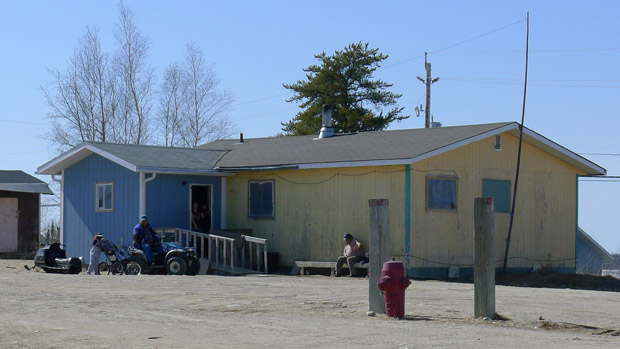
Cat Lake is the epicentre of prescription drug addiction in Canada. Community leaders figure that between 70 and 80 per cent of the adults are hooked on narcotic pain killers OxyContin or Percocets.

Governments and local health authorities are slowly gearing up to deal with the runaway addiction that has slammed communities across the country, but especially First Nations.

But the help can’t come quickly enough for the children of Cat Lake.

“We feel that we don’t know what to do to help you stop doing Drug,” the children wrote as “Point Number Five.”

“We want you to stop because it hurts our family and we don’t like it when we’re angry,” according to point number four.

The children in this lake-soaked corner of northwestern Ontario 400 kilometres north of Thunder Bay put together the list over the course of a few days in a workshop with the help of a local band member.

They are desperately yearning for ways to end to the crisis in their community that triggered waves of theft and left children hungry and bereft of the stability and support they crave.

Out of a population of about 700, local officials say they collect 500 needles a week through the needle-exchange program.

They have put 172 adults on their list of confirmed addicts, and another 250 are suspected. Almost everyone else is either a child or an elder.

Oxy, the highly addictive and extremely expensive little pill, has become a way of life here and in many reserves.

The drug is supposed to be taken for intense pain, by prescription only. It produces an instant high when crushed, snorted or injected and that high has triggered a massive demand for the drug across the continent. Some of the biggest profits are drawn from some of the poorest people in Canada.

In Cat Lake and other parts of northwestern Ontario, health care workers just assume most of their adult patients are using.

And yet, the narcotic pain killer is no longer being produced.

Purdue Pharmaceuticals has pulled it from the shelves, prompting First Nations leaders to warn of a pending crisis of withdrawal for which no one is well prepared.

Oxy addicts can build up a tolerance and require larger, more frequent doses to get high. But kicking the addiction, for many, is too punishing many to bear.

Abnormal sleeping patterns, violent shakes, diarrhea, headache and anxiety are common, for days on end. Relapses are frequent.

The dealers’ stockpiles of the opioid are now dwindling and the price is climbing steeply. Authorities have been bracing for a withdrawal epidemic on reserves.

Const. Kyle Brend of the Nishnawbe-Aski Police force in Cat Lake said the spike in price for the drug has forced users to reconsider their habits — but not always for the better.

A full-strength pill can sell for about $1000 and a quarter-dose for about $250. When a supply would come into the community, users would scour their houses for possessions to sell, hit up their relatives for cash, raid their savings, or gamble for cash, Brend said. There’s a bit less of the door-to-door scavenging for drug money of late.

“You sell a digital camera for $60. You sell a couple things like that, you have money. It’s getting harder nowadays with the prices.”

Instead, addicts are looking for other ways to get high.

Rumours and Internet chatter about how to abuse the new version of Oxycontin — called OxyNEO — abound. Health workers suspect increased usage of cocaine and especially morphine. Brend sees evidence of more booze, even though Cat Lake, like many reserves in the area, is supposed to be dry.

“Now it seems there’s a lot of drinking to offset what they’re not getting in the pills.”

The police are cracking down as best they can on contraband. But even though Cat Lake has only one entry point — the airport — now that the winter road has melted, the community has only ever ejectedone person for dealing, Brend recalls.

The pills are easy to hide — in pockets, packages, even inside diapers or the lining of clothing. The entire community knows who is dealing, including the chief and council as well as the police, but authorities never catch them in the act because they are protected by tight-knit family and friends.
Half of adults in North Caribou Lake struggle with addiction

In North Caribou Lake, another northwestern Ontario community struggling with addictions, a 20-something dealer stands out in the street in broad daylight, surrounded by a small group of band members. He melts away when anyone in authority casts a wary eye.

So instead of focusing on crime and punishment, community leaders focus on healing the addicted and convincing any remaining non-users to stay clean.

“STOP NOW!” reads item number 8 on the children’s list. “We want you to get help and get better.”

Help on that front is on the way, but ever so slowly, and in small doses. Stopping right now is far easier said than done.

In North Caribou Lake, where about half the adults are addicted, the local nursing station is not yet set up with the medical treatment program that many health authorities believe is the most effective way to kick oxy addictions. The medical treatment, Suboxone, mitigates the horrible withdrawal symptoms. But the recovery program takes weeks and requires health authorities to monitor the patients very closely.

Many reserves in the region can only administer Suboxone in rare cases, under specific circumstances. The nurses in charge of the day-to-day health of remote communities aren’t empowered to set up full-fledged treatment programs. That’s changing, but ever so gradually.

In Sioux Lookout — a short flight to the south of Cat Lake and North Caribou Lake — the hospital just added a five-bed unit for mental health. The unit has quickly turned into an oxy treatment centre. But with thousands of addicts in the region, the beds are always full and the wait list is growing longer, now standing at four months.

In Cat Lake, Health Canada and band administrators are scrambling to start a Suboxone program that will combine a land-based recovery.

They had trouble finding space for a recovery centre, since housing and infrastructure are in severe short supply. They plan to convert an old building near the band office into a respite where Suboxone can be administered and patients can be monitored closely for a week.

Then, the recovering addicts will be sent out into the bush, with few supplies except the very basics. For several weeks, under the eye of a health professional, they’ll set up camp, hunt, fish, soak in nature, and — hopefully — conquer their addictions.

The first intake of three people starts on April 30. The waiting list has 15 names on it. But it should have hundreds, says health director Valerie Spence.

Still, it’s something.

“It’s a relief actually. I can breathe,” says Spence. “It was really hard seeing my family, my friends, all getting sick. I have a niece, she went to withdraw for about two weeks. I saw first-hand how it can effect people. She used to be normal. She’s not the same any more…..She lost herself, I would say. She’s slowly coming back.”

But down in Sioux Lookout, the co-medical director of the First Nations Health Authority is not breathing any sigh of relief. Dr. Claudette Chase despairs over the lack of comprehensive plan that would, she believes, treat more people and prevent so many relapses.

Recovering addicts need a “seamless service”, not just in regional centres, but in their own communities so that the help they receive stands a chance of sticking.

“We’ve got the Cadillac service for three weeks, and (then) often people drop off the face of the earth, to nothing.”

Some recovering addicts from Cat Lake seek out family and friend support in other communities so that they don’t have to go back to the oxy-dominated society of their home reserve. But Chase has come to expect relapse.

“Most patients who have left the unit, not all, but most of them who didn’t go on maintenance have eventually relapsed. Because often they go home, and the communities are trying very hard to build support services but it’s early stages,” she said.

Canadians need to ask themselves, however, why they and their governments are so willing to fund and support heart surgery or hospitalization for drug addicts in their final days, but won’t embrace what’s needed to control the crisis, she added.

“I do think that’s an important question for us to ask ourselves. Why is this happening? Why won’t we take this on? Because it is so far from rocket science,” she said.

“It would be great to see Health Canada jump in with both feet.”

That way, Chase said, the parents would stand a chance of making good on Item Number 11 of the children’s list: “Please go for treatment and get HEALTHY!”

Posted in Uncategorized | Comments Off on OXY OUT OF CONTROL

DPNC IN PARLIAMENT

February 15, 2012

Presented to:

Standing Senate Committee on Legal and Constitutional Affairs

By:

DRUG PREVENTION NETWORK OF CANADA
4438 West 10th Avenue, Suite 178
Vancouver, BC V6R 4R8
(604) 731-2425

Standing Senate Committee on Legal and Constitutional Affairs

Re: Bill C-10
Amendments to Controlled Drugs and Substances Act (CDSA)
Part 2, Clauses 32-33, 39-48, and 50-51

Illicit drug use imposes tremendous economic and social costs on society in the form of health care, enforcement, loss of productivity in the workplace and at home, disability and death of addicts.

According to Antonio Mario Costa, Executive Director of the UN Office on Drugs and Crime (UNODC), however, legal controls on drug use have been highly successful.[i] This is contrary to some claims, based solely on ideology, that prohibition does not work. The latter is an incorrect assumption.

One has only to analyze the results of prohibition in the US between 1920 and 1933. Alcohol consumption declined dramatically during prohibition, noted by the large decrease in cirrhosis deaths (29.5 per 100,000 in 1911 and 10.7 in 1929). Admissions to State mental hospitals for alcoholic psychosis declined from 10.1 per 100,000 in 1919 to 4.7 in 1928. Arrests for public drunkenness and disorderly conduct declined by 50%.[ii]

For the population as a whole, the best estimates are that consumption of alcohol declined by 30% to 50%. That is, prohibition did not end alcohol use, but it did succeed by reducing by one-third the consumption of a product that had wide historical and popular sanction.[iii] In contrast, the use of marijuana, heroin and other controlled drugs have never been a widely accepted activity in the US or in Canada.

Parliament’s Role to Determine Appropriate Sentences

It is Parliament’s role to advise courts and judges across the country, so that offenders are led to understand the severity of the offences they commit. This objective can be achieved, inter alia, by mandatory minimum sentences. Unfortunately, the application of judicial discretion in sentencing does not always achieve this objective. It is detrimental to the interests of the Canadian public to rely solely on judicial discretion in sentencing, as it can lead to a loss of confidence and faith in the criminal justice system. This is due to the fact that, regretfully, judicial discretion does not necessarily mean the application of common sense by judges when sentencing. In fact, judges, when sentencing, have frequently failed to balance the objectives of denunciation and general deterrence, with their desire for rehabilitation of the offender. This has led, in all too many instances, to a chaotic sentencing regime for offences, especially in regard to marijuana grow ops and marijuana possession. That is, operators of grow-ops all too frequently are given minimum fines, and this “slap on the wrist” approach is regarded by the offenders as merely the cost of doing business, and in no way serves as a deterrent. According to The Royal Canadian Mounted Police Report (2009) on the illicit drug situation in Canada, domestically produced marijuana continues to provide a source of considerable profit for Canadian based organized crime.[iv]

Similarly, possession of cannabis is regarded by some liberal judges, for personal ideological reasons, to be merely a minor offence. Consequently, in exercising their “discretion”, they have mostly handed down sentences of probation only.[v]

According to the UN Office of Drugs and Crime (July 2007), Canada has the highest proportion of marijuana users in the industrialized world, reaching 16.8% of those between 15 and 64 years of age. Cannabis offences rose 13% in Canada between 2009-2010.[vi] The lenient sentencing (probation only) for cannabis possession has led to a public perception that marijuana use does not cause harm. Well-informed individuals should understand, however, that marijuana is not a harmless drug. In fact, there are many, many studies indicating the contrary. Please refer to our website https://dpnoc.org/, under the heading, Drug Facts, Marijuana and http://www.whitehouse.gov/ondcp/marijuanainfo for studies on harm caused by marijuana use.

Drug Courts

There are, at present, only six drug courts in Canada. This is in contrast to literally thousands of such drug courts in the USA.

Drug courts provide non-violent drug users with the option of obtaining treatment in lieu of conviction. That is, these courts provide a window of opportunity for the addict to obtain treatment, which the addict may not otherwise consider. It is significant that, whether the treatment is undertaken voluntarily, or by way of a court order, the rate of success remains the same.

It is significant that in the USA, 75% of drug court graduates remain arrest-free at least two years after leaving the program.[vii]; [viii] The National Crime Prevention Centre also reports that there is a significant decrease in drug use and drug related crimes for those who complete the court designated program[ix]. However, it is troubling that apparently only 14% of the participants of court-supervised treatment in Canada actually complete such programs.[x] Therefore, strategies are urgently required to encourage participants to complete treatment programs, as well as to greatly increase the number of drug courts established across this country in order to assist drug addicts.

[i] The Observer September 5, 2010 (UK)

[ii] US Drug Enforcement Administration Speaking Out Against Drug Legalization online at www.dea.gov, page 9.

[iii] Ibid.

[iv] Royal Canadian Mounted Police, Report on the Illicit Drug Situation in Canada- 2009.

[v] Dauvergne, “Trends in police-reported drug offences in Canada,” Juristat, Vol. 29, No 2, May 2009.

[vi] Ibid.

[vii] Roman et al, the Urban Institute and Caliber, “Recidivism Rates for Drug Court Graduates: Nationally Based Estimate-Final Report,” Washington D.C., 2003.

[viii] Department of Justice, Backgrounder (2 June 2005).

[ix] Public Safety Canada, National Crime Prevention Centre, Building the Evidence – Evaluation Summaries, “Drug Treatment Court of Vancouver (DTCV),” 2008-ES-18.

[x] Ibid.

Posted in Uncategorized | Comments Off on DPNC IN PARLIAMENT

MEDDLING ON MARIJUANA

The following article is written by Gwen Landolt, the retiring President of The Drug Prevention Network of Canada. This piece will be published in the January edition of the REAL Women voice, REALity.

Chuck Doucette has been elected the new President of DPNC.


THE COURTS MEDDLING ON MEDICAL MARIJUANA


Courts’ meddling on issues about which they are not properly informed has caused chaos.  There is no better example of this than the Ontario Court of Appeal’s decision to legalize marijuana for medical purposes.


In 2000, in the case Regina vs Parker, the Ontario Court of Appeal ordered that marijuana used for medical purposes was a constitutional right, even though there was little evidence introduced to support this conclusion.  It was simply an ideological decision made by activist judges.


Marijuana for Medical Purposes Not Justified


Medical literature is replete with hundreds of studies about the physical and emotional harm that can result from this plant.  Recent studies reveal that psychosis, a severe form of mental illness, is much higher in people who begin using marijuana at or before 15 years of age.  Amotivational syndrome (characterized by a person who has no initiative, no drive and no energy) is well documented in people who use this drug regularly.  Increased problems with depression and anxiety have also been documented.  The same dose that “works” today won’t work forever and increased amounts are needed to obtain the same effect.  This is what defines chemical dependence.


The tar and carcinogens in smoked marijuana are just as dangerous as in cigarettes or even worse, since many cigarettes have filters.  Marijuana smoke is an irritant to the lining of the nose and lungs, which can cause chronic cough, sinus irritation and lung diseases, such as emphysema and lung dysplasia.  Decreased testosterone in males and altered menstrual cycles in females are other adverse effects.  The brain is also affected negatively, with a decrease in both the memory capacity and the ability to think, along with an increase in seizure risk.  Slowed reaction times are also clear consequences of marijuana use and can have significant detrimental effects on driving skills.


With such harmful effects, the question then arises whether it is worth these risks to allow marijuana for medical reasons. Unfortunately, the current data on the medical use of marijuana are very limited and what little there are available, indicate that it is not usually effective for pain relief, as claimed by advocates.


In addition, there are no standardized dosages as well as no standards of concentration of the plant or its purity. All in all, the use of marijuana for medical purposes was not a reasonable decision for the Ontario court to make. The Ontario Courts, therefore, were way off base in ordering marijuana’s availability for medical treatment.  So, what else is new with judicially active Ontario courts?


The Obtuse Allan Rock, Liberal Minister of Health


Instead of appealing this nonsensical and dangerous court decision, the then Liberal Minister of Health, Allan Rock, eagerly set about authorizing access to marijuana for medical use, by amending the regulations, and also by establishing a federal government operated marijuana grow-op, in an abandoned copper mine, in Flin Flon, MB. This was a disaster.  There was no consistency in the quality of the marijuana produced, and the smokers refused to buy the government’s product.  Canada, by the way, is the only government in the world that produced its own marijuana for sale.


As a consequence of the marijuana users refusing to buy the government’s marijuana, the government issued licenses to the marijuana users to grow their own marijuana, or to allow someone else to grow it for them.  The licensees, however, had to first obtain a physician’s certificate indicating the medical need for the marijuana.


This led to a new legal challenge in the Ontario Superior Court by a marijuana user, who was unable to obtain the required physician’s authorization to grow his own marijuana.


On April 13, 2011, the Superior Court of Ontario, declared the medical marijuana program was unconstitutional because the government’s system to supply medical marijuana was ineffective.  The government appealed this decision and the appeal is to be heard in the Ontario Court of Appeal in March 2012.


In the meantime, Health Canada has come up with yet another system of providing medical marijuana.  The Minister of Health, Leona Aglukkaq, announced, in June 2011, that the current system of allowing medical marijuana users to grow their own or have someone else grow it for them had become dangerous. These growers do not follow local electrical, health and safety by-laws. Further, there were so many licenses to grow marijuana,  that it was virtually impossible for municipalities to know who was licensed, and whether the licensed growers were conforming to the conditions of the license.  As a result, Ms. Aglukkaq’s new rules provide that medical marijuana patients will be required to obtain a document from their doctor, authorizing the use of marijuana for medical purposes.  This document will then be presented only to a government licensed commercial grower of marijuana.


Doctors Refuse to Cooperate with the new Government Plan

The 75,000 members of the Canadian Medical Association (CMA), however, announced that they would have nothing to do with this plan.  The CMA stated that its refusal to participate is due to the fact that marijuana is an untested and unregulated substance about which most physicians know little or nothing.


The fact is that marijuana has never gone through the normal regulatory review process and this has made physicians wary of its use for medicinal purposes. Physicians also fear being exposed to legal action and becoming a “go-to” source for people seeking marijuana, not to alleviate their pain, but rather, to alter their consciousness.


No drug company wishes to evaluate smoked marijuana as a medicine, as there is no money in it for them.  Similarly, funding agencies refuse to become involved with this problem, as they don’t see smoking marijuana as a safe, viable drug delivery system.  For these reasons, “medical” marijuana has not been endorsed by any of the major medical societies i.e., Canadian Medical Association, the American Medical Association (AMA), the American Osteopathic Association (A0A), and the American Academy of Family Physicians (AAFP).


Marijuana users want to smoke it – and are using the medical approach to achieve this so as to normalize its use. They are assisted in this objective by the politically activist judges on the Ontario courts.

Posted in Uncategorized | Comments Off on MEDDLING ON MARIJUANA